Home Generator Installation Cost in NJ: 2026 Pricing for Portable and Standby Systems
Licensed NJ Handyman
Handyman Near Me NJ · 25+ years
Key Takeaways
- Portable generator + manual transfer switch installs run $1,200–$2,500 in NJ — the most affordable whole-home backup for essentials.
- Standby generators (10–16 kW) typically cost $4,000–$7,000 installed; 20–24 kW whole-home systems run $8,000–$15,000+.
- A licensed electrician must install any transfer switch — backfeeding a generator into the panel without one is illegal and deadly.
- Monmouth County outages often follow coastal storms and nor’easters — sump pumps, refrigerators, and medical equipment are the most common backup priorities.
- Sizing depends on what you need running simultaneously, not total house square footage.
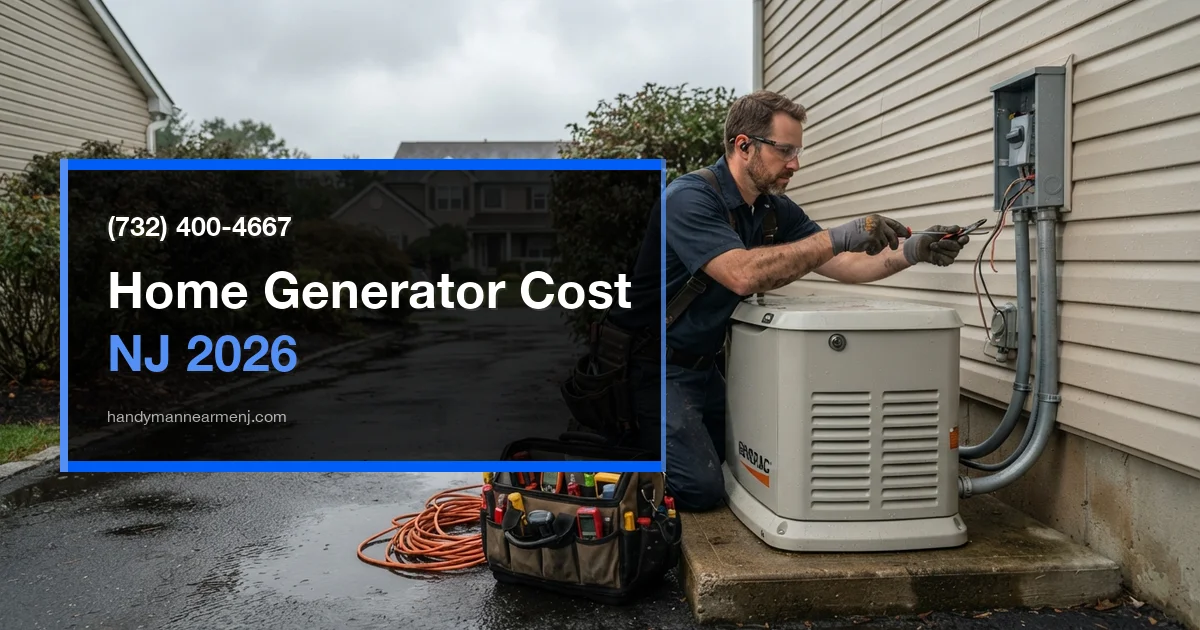
Home generator installation in NJ ranges from $1,200 for a portable setup with a transfer switch to $15,000+ for a whole-home standby unit in 2026. The right choice depends on whether you need to keep a sump pump and fridge running during a day-long outage, or power HVAC, lighting, and the entire panel for days.
2026 Pricing by Generator Type
| System Type | Unit Cost | Installed Total | Powers |
|---|---|---|---|
| Portable 3–5 kW (corded) | $400–$800 | $400–$800 (no install) | Few outlets via extension cords |
| Portable 5–7.5 kW + manual transfer switch | $700–$1,500 | $1,200–$2,500 | Selected circuits — fridge, sump, lights |
| Standby 10–12 kW (partial home) | $2,500–$4,500 | $4,000–$6,000 | Most essentials + one HVAC zone |
| Standby 16 kW | $3,500–$5,500 | $5,500–$8,000 | Larger homes, well pump, two HVAC zones |
| Standby 20–24 kW (whole home) | $5,000–$9,000 | $8,000–$15,000+ | Full panel backup |
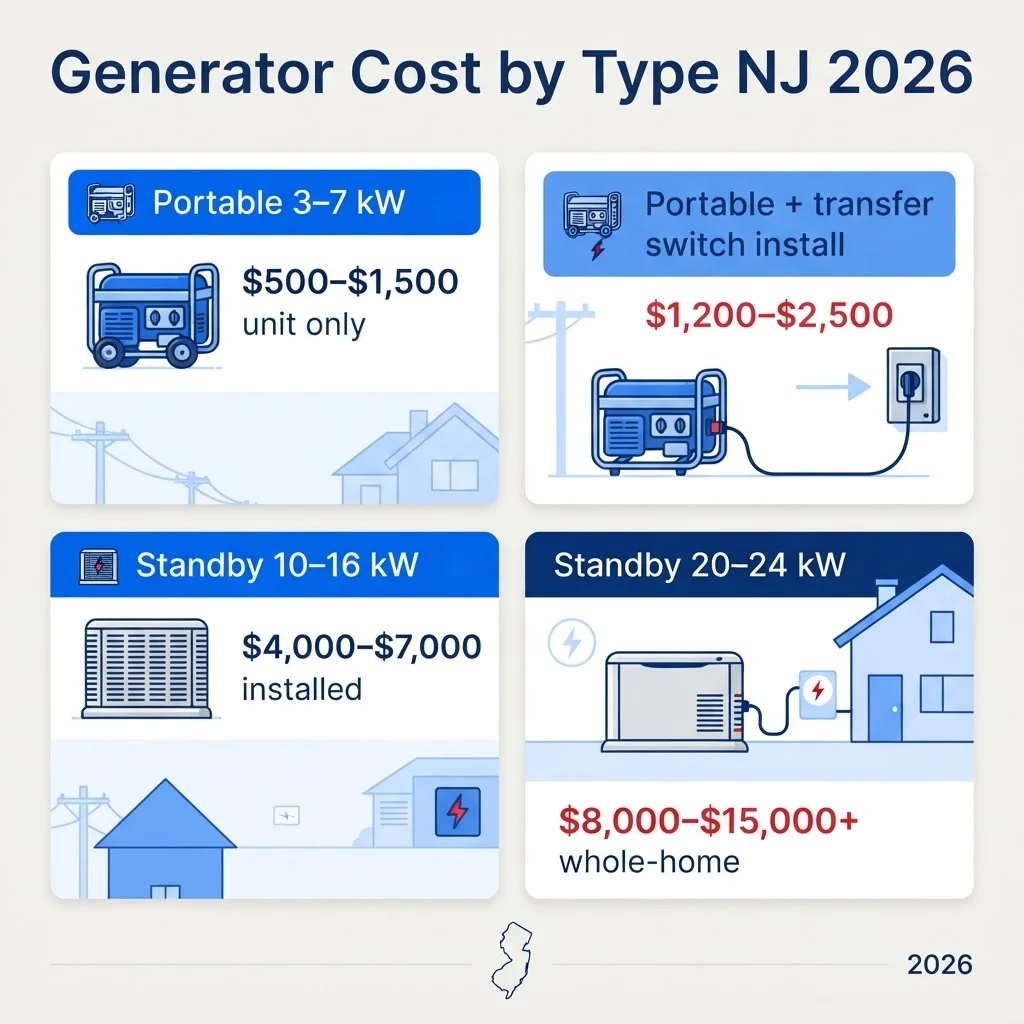
Installed standby prices include the generator, automatic transfer switch, pad or mounting, gas line or propane tank connection (by a plumber or propane supplier), electrical permits, and startup commissioning. Concrete pad, gas line trenching, and propane tank install add cost on top of the electrical scope.
Portable vs Standby: Which Fits Your Home?
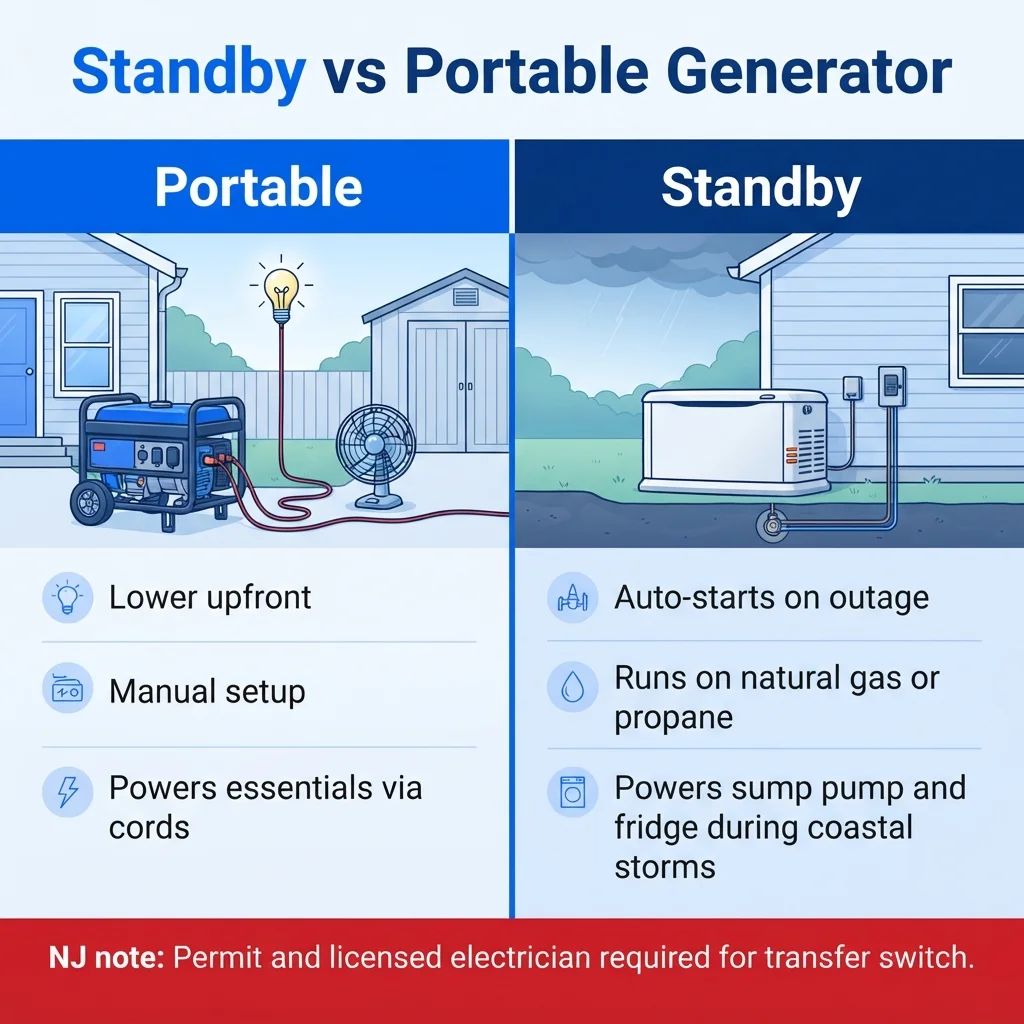
Portable generators cost less upfront and work for occasional outages. You store fuel (gasoline stabilizes for months; propane portables exist), wheel the unit outside, connect via transfer switch or cords, and start manually. Downsides: manual setup in rain, fuel storage, noise, and limited wattage — a 5,500-watt portable runs a fridge, sump pump, and a few lights, but not central AC.
Standby generators sit permanently on a pad, connect to natural gas or propane, and start automatically within seconds of an outage. They run quieter, handle higher loads, and need no fuel handling during a storm. The tradeoff is upfront cost and annual maintenance ($150–$300).
For shore-area homes in West Long Branch, Long Branch, and Ocean Township, the deciding question is usually: Does your basement depend on a sump pump? If yes, automatic backup power pays for itself the first time a nor’easter knocks out electricity for 12 hours. Our basement waterproofing guide covers sump pump options including battery backup as an alternative to generator power.
What the Electrical Install Includes
A licensed generator installation in NJ typically covers:
- Load calculation to size the generator correctly
- Transfer switch — manual (portable) or automatic (standby)
- Permits and inspection with the local building department
- Wiring from switch to panel — never plug a generator directly into a wall outlet
- Startup test under load and homeowner walkthrough
Gas line work for standby units is usually handled by a plumber or utility — not bundled in the electrician’s quote. Propane tanks require site work and supplier coordination.
Never backfeed. Connecting a portable generator to a dryer outlet or any home circuit without a transfer switch sends power back into the grid and can electrocute utility workers. It also bypasses your panel’s overcurrent protection. This is a hard safety line — hire a licensed electrician for any permanent or semi-permanent setup.
Sizing: What Do You Actually Need?
Common load priorities for Monmouth County homes:
| Appliance / Circuit | Running Watts (approx.) |
|---|---|
| Sump pump (1/3 HP) | 800–1,200 |
| Refrigerator / freezer | 600–800 |
| Gas furnace blower | 400–800 |
| Well pump | 1,000–2,000 |
| Window AC unit | 1,000–1,500 |
| Central AC (3 ton) | 3,500–5,000+ |
| Lights + outlets (partial) | 500–1,000 |
Add running watts for everything you want simultaneously, then add the highest single starting surge (motors like sump and well pumps surge 2–3× on startup). That total determines minimum generator size.
Most partial-home standby installs in NJ land on 12–16 kW. Whole-home with central AC often needs 20 kW+.
Maintenance and Operating Costs
Standby generators need annual service — oil, filter, battery check, and exercise cycle. Budget $150–$300/year. Portable units need oil changes every 50–100 hours of run time and stabilized fuel rotation.
Natural gas standby units avoid fuel storage entirely. Propane standby requires a tank refill contract. Portable gasoline units need fresh fuel and safe outdoor operation — never run a generator in a garage, basement, or enclosed porch. Carbon monoxide kills silently.
Your Next Step
Not sure whether a transfer switch on a portable unit or a full standby system makes sense for your home? Call or text (732) 400-4667 for a free consultation. Our electrical team sizes loads, pulls permits, and installs transfer switches across Monmouth County — 25+ years of experience, fully insured.
Frequently Asked Questions
How much does a whole-house generator cost in NJ?
Whole-home standby generators (20–24 kW) typically cost $8,000–$15,000+ installed in NJ in 2026, including the automatic transfer switch and electrical work. Gas line and pad work may add to that.
Do I need a permit for a generator in NJ?
Yes. Transfer switch installation and standby generator electrical work require permits and inspection in virtually all Monmouth County municipalities. Portable cord-only use without a permanent connection does not, but that limits what you can safely power.
Is a portable generator enough for a sump pump?
Often yes — a 5,000–7,500 watt portable with a manual transfer switch can run a sump pump, fridge, and lights. You must start it manually and refuel during extended outages.
How long does standby generator installation take?
Electrical and switch work takes 1–2 days. Full standby projects including gas line, pad, and commissioning often span 2–5 days depending on gas utility scheduling.
Can a handyman install a generator transfer switch?
No. Transfer switch installation is electrical work that requires a licensed electrician in New Jersey. Gas connections require a plumber or certified gas fitter.
Need a Hand?
Licensed Handyman in New Jersey
Same-day service · Free estimates · 25+ years in New Jersey
Call (732) 400-4667People Also Ask
Frequently Asked Questions
How much does a whole-house generator cost in NJ?+
Whole-home standby generators (20–24 kW) typically cost $8,000–$15,000+ installed in NJ in 2026, including the automatic transfer switch and electrical work. Gas line and pad work may add to that.
Do I need a permit for a generator in NJ?+
Yes. Transfer switch installation and standby generator electrical work require permits and inspection in virtually all Monmouth County municipalities. Portable cord-only use without a permanent connection does not, but that limits what you can safely power.
Is a portable generator enough for a sump pump?+
Often yes — a 5,000–7,500 watt portable with a manual transfer switch can run a sump pump, fridge, and lights. You must start it manually and refuel during extended outages.
How long does standby generator installation take?+
Electrical and switch work takes 1–2 days. Full standby projects including gas line, pad, and commissioning often span 2–5 days depending on gas utility scheduling.
Can a handyman install a generator transfer switch?+
No. Transfer switch installation is electrical work that requires a licensed electrician in New Jersey. Gas connections require a plumber or certified gas fitter.
Keep Reading