Wood Rot Repair Cost in NJ: 2026 Pricing for Trim, Decks, and Shore-Area Homes
Licensed NJ Handyman
Handyman Near Me NJ · 25+ years
Key Takeaways
- Wood rot repair in New Jersey typically runs $150–$600 for exterior trim and $500–$2,000+ for structural framing or multiple locations.
- Shore-area homes in Monmouth County see rot faster — salt air, humidity, and older pre-1980 trim hold moisture longer than inland properties.
- Rot always has a moisture source — fixing the wood without stopping the water means it comes back within a season.
- Soft, spongy wood, bubbling paint, and dark staining are early signs — catch them before joists and posts are compromised.
- Cosmetic trim rot is a carpentry job; structural rot may need engineered lumber and permit inspection.
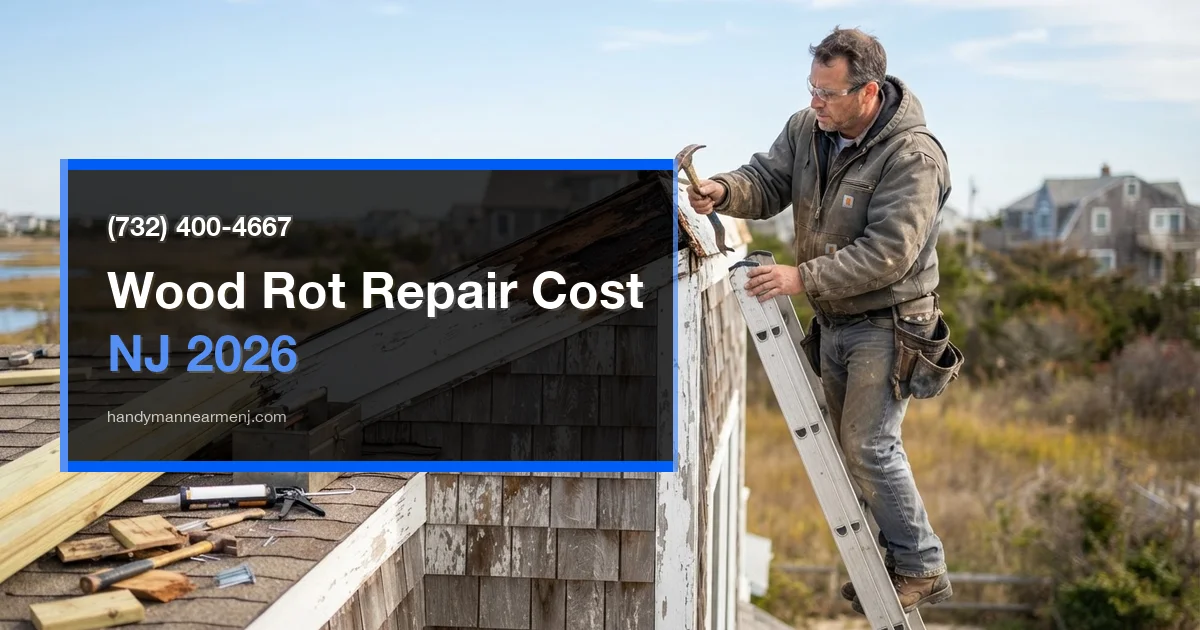
Wood rot repair in NJ costs $150–$600 for most exterior trim fixes and $500–$2,000+ when joists, posts, or framing are involved. Pricing depends on how much material is affected, whether the moisture source is fixed, and how accessible the repair area is. Homes near the Jersey Shore pay for speed — salt spray and humid summers accelerate decay on fascia, sills, and deck boards that inland homes might keep another decade.
2026 Pricing by Location
| Repair Location | Typical Cost | Timeline |
|---|---|---|
| Window sill (single) | $150–$400 | Half day |
| Door threshold / exterior trim | $200–$500 | Half day |
| Fascia board (10 linear ft) | $250–$600 | 1 day |
| Deck railing post (single) | $200–$450 | Half day |
| Deck board replacement (section) | $300–$800 | 1 day |
| Porch column / post (structural) | $400–$1,200 | 1–2 days |
| Floor joist / framing repair | $500–$2,000+ | 1–3 days |
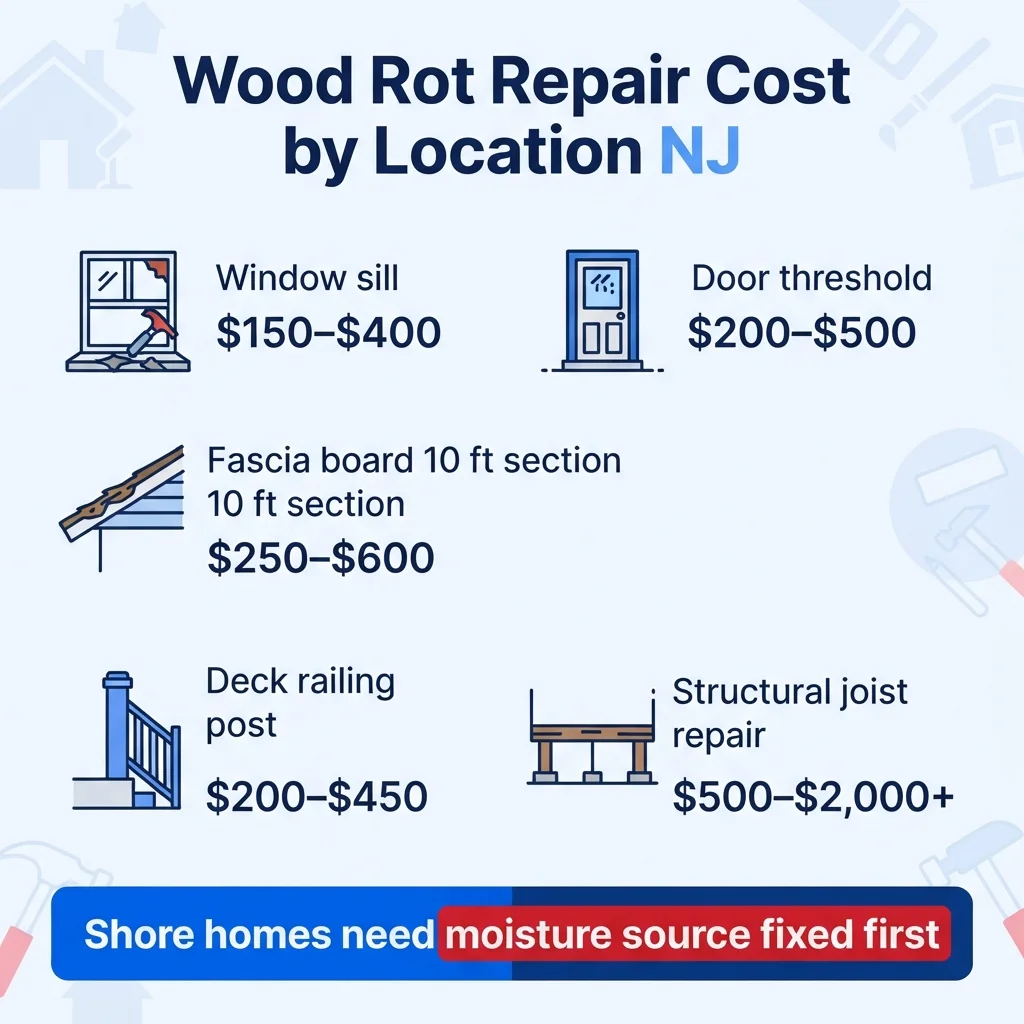
These are professional carpentry prices including removal of rotted material, treated or composite replacement where appropriate, sealing, and paint-ready finish. Full exterior repainting adds $200–$600+ depending on scope.
Why Shore Homes Rot Faster
Monmouth County’s coastal climate combines salt air, high humidity, and wind-driven rain — three forces that break paint films and keep wood damp. Much of the housing stock in West Long Branch, Long Branch, and Sea Bright was built before modern flashing standards. Water gets behind trim, sits in sills, and fungi grow year-round in NJ’s freeze-thaw cycles.
Common failure points we see on shore-area homes:
- Fascia and soffit behind clogged gutters (see our memorial day prep checklist for gutter maintenance timing)
- Window sills where caulk failed and water wicked into end grain
- Deck ledger boards where flashing was omitted or installed wrong
- Porch posts where the base traps splash water from downspouts
- Door thresholds on north-facing entries that never fully dry
Fixing rot without addressing the gutter, caulk, or flashing that caused it is temporary. A good repair includes identifying and sealing the moisture path.
Signs You Have Wood Rot
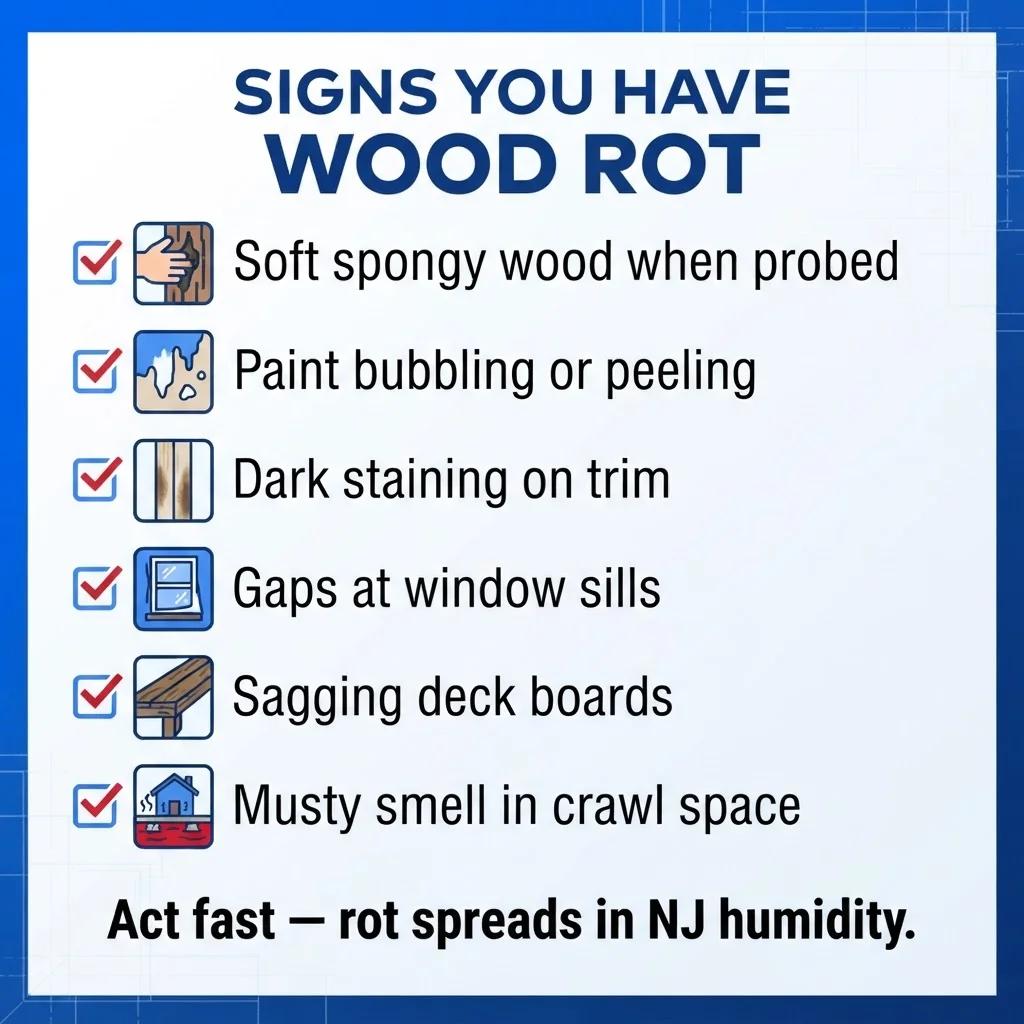
Probe suspect areas with a screwdriver. Sound wood resists; rot gives way easily.
- Soft, spongy texture when poked — active decay
- Paint bubbling or peeling in concentrated patches — moisture under the film
- Dark brown or black staining on trim or sills
- Gaps opening at window corners or door frames
- Sagging deck boards or rails that move when pushed
- Musty smell in crawl spaces or enclosed porches
Do not confuse surface mildew (green/black on paint) with rot. Mildew cleans off; rot replaces wood fiber with fungus. If you are unsure, a carpenter can probe and scope the damage in one visit.
Repair vs Full Replacement
Repair in place works when less than 30% of a board is affected and the surrounding wood is sound. The rotted section is cut out, a dutchman patch or sister board is installed, sealed, and finished.
Full replacement is required when:
- The board is more than half compromised
- Rot extends into structural members (joists, beams, posts)
- Multiple adjacent pieces are failing (often indicates a systemic moisture problem)
- Termite or carpenter ant damage accompanies the rot
Deck rot often pairs with re-staining and sealing after repair. Our deck staining guide covers protecting repaired boards through NJ winters.
Prevention After Repair
- Keep gutters clean and downspouts extended away from the foundation
- Recaulk window and door perimeters every 3–5 years on shore-facing walls
- Repaint or stain exterior wood on a 5–7 year cycle — paint is your first waterproof layer
- Fix splash zones at deck posts and porch columns with proper flashing and concrete caps
- Ventilate enclosed crawl spaces and soffits to reduce trapped humidity
Composite trim (PVC or fiber-cement) costs more upfront but eliminates rot on sills and fascia in high-exposure locations. Worth considering on a full replacement rather than patching softwood a third time.
Your Next Step
Found soft wood on fascia, a sill, or deck post? Call or text (732) 400-4667 for a free estimate. Our carpentry team removes rot, fixes the moisture source, and replaces with sealed, lasting material — West Long Branch and all of Monmouth County, 24/7.
Frequently Asked Questions
How much does wood rot repair cost in NJ?
Most exterior trim rot repairs cost $150–$600 in 2026. Structural repairs involving joists, posts, or multiple locations run $500–$2,000+.
Can I repair wood rot myself?
Small trim patches with wood hardener and epoxy filler work for minor surface decay. Structural rot, ledger boards, and posts should be handled by a carpenter who can assess load and replace material correctly.
Does homeowners insurance cover wood rot?
Usually no — insurers treat rot as maintenance failure from long-term moisture, not sudden damage. Storm-related water intrusion that causes rot may be partially covered depending on your policy.
How fast does wood rot spread in NJ?
In humid coastal conditions, active rot can compromise a trim board within 1–2 seasons if moisture continues. Structural members take longer but are harder to detect until significant strength is lost.
Is wood rot the same as mold?
No. Rot is fungal decay that destroys wood fiber. Mold grows on surfaces and may indicate moisture but does not always mean structural rot. Both need moisture control.
Need a Hand?
Licensed Handyman in New Jersey
Same-day service · Free estimates · 25+ years in New Jersey
Call (732) 400-4667People Also Ask
Frequently Asked Questions
How much does wood rot repair cost in NJ?+
Most exterior trim rot repairs cost $150–$600 in 2026. Structural repairs involving joists, posts, or multiple locations run $500–$2,000+.
Can I repair wood rot myself?+
Small trim patches with wood hardener and epoxy filler work for minor surface decay. Structural rot, ledger boards, and posts should be handled by a carpenter who can assess load and replace material correctly.
Does homeowners insurance cover wood rot?+
Usually no — insurers treat rot as maintenance failure from long-term moisture, not sudden damage. Storm-related water intrusion that causes rot may be partially covered depending on your policy.
How fast does wood rot spread in NJ?+
In humid coastal conditions, active rot can compromise a trim board within 1–2 seasons if moisture continues. Structural members take longer but are harder to detect until significant strength is lost.
Is wood rot the same as mold?+
No. Rot is fungal decay that destroys wood fiber. Mold grows on surfaces and may indicate moisture but does not always mean structural rot. Both need moisture control.
Keep Reading