How to Power Wash a House Safely: A Step-by-Step Guide
Licensed NJ Handyman
Handyman Near Me NJ · 25+ years

Key Takeaways
- Always start with the lowest effective pressure setting. Most house siding washes clean at 1,200–1,500 PSI. Concrete can handle 2,000–3,000 PSI.
- Use a 25-degree or 40-degree fan nozzle for siding. The 0-degree (red) nozzle can cut wood and scar vinyl. Never use it on a house.
- Wet plants and cover landscaping before you start. House wash detergents contain surfactants that damage vegetation if they dry on leaves.
- Work top to bottom on the rinse, bottom to top on the soap. This stops dirty water from running over cleaned areas.
- Shore-area homes in NJ accumulate salt, algae, and mildew faster than inland homes. A soft wash with a low-concentration surfactant lifts biological growth without the surface damage that high pressure causes.
You can power wash most houses safely in an afternoon with the right machine, the right nozzle, and a sensible order of operations. The biggest mistakes are too much pressure and skipping the prep. Both are easy to avoid.
Before You Touch the Trigger: The Setup That Protects Everything
The hour you spend on setup determines whether the job goes cleanly or turns into a damage-control situation.
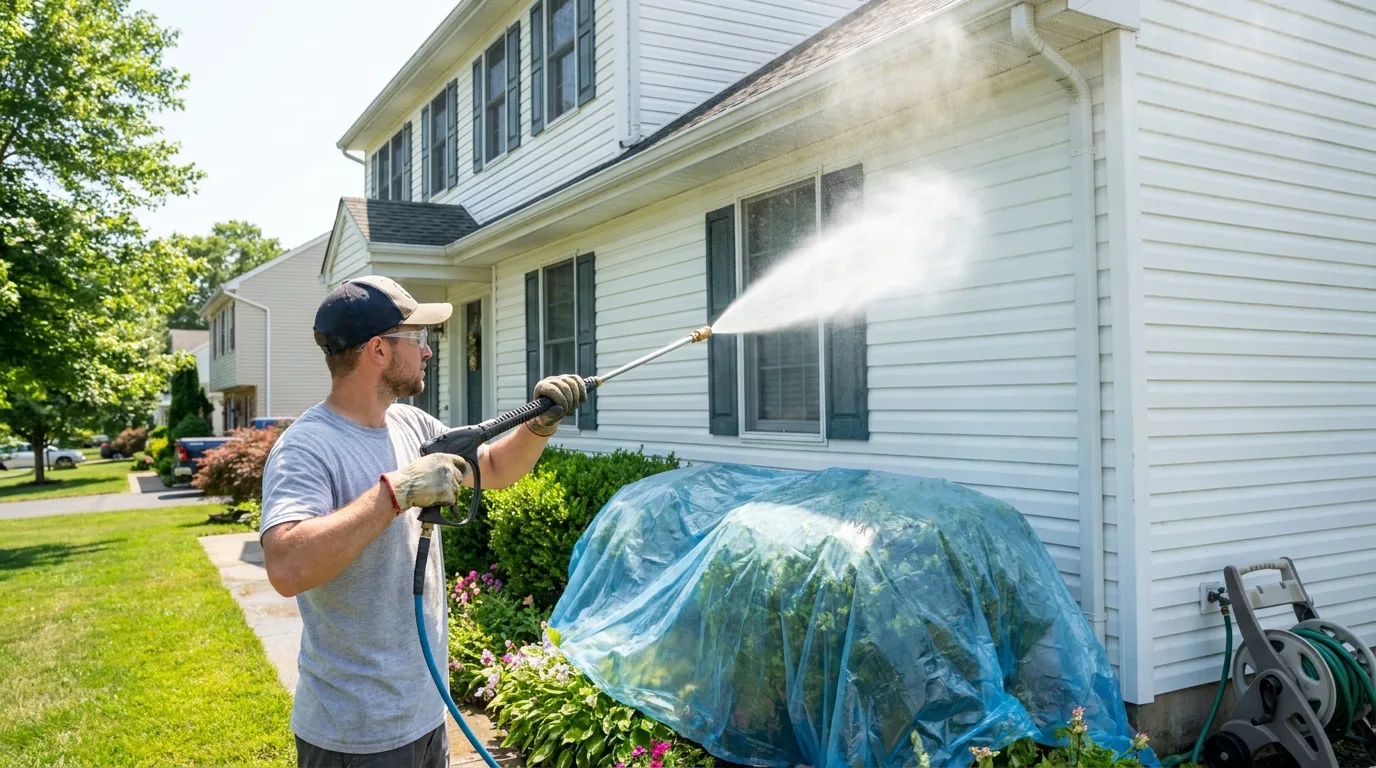
Check for damage first. Walk the perimeter and look for cracked caulk, loose siding panels, gaps around windows, and any spots where water could enter behind the surface. Pressure washing forces water into every gap it finds. A cracked window caulk line that’s mildly drafty in winter becomes a water intrusion point the moment you put 1,500 PSI against it. If you find issues, seal them first or avoid washing those areas directly. Our home repair services page covers the kinds of prep repairs we handle before exterior cleaning jobs.
Protect your landscaping. Wet down all plants, shrubs, and flower beds with plain water before applying any detergent. The pre-soak dilutes any surfactant that lands on leaves. Cover beds directly adjacent to the foundation with plastic sheeting. Rinse again after you’re done.
Close all windows and doors. This sounds obvious, but also check sliding tracks, dryer vents, and outdoor electrical outlets. Cap or cover outdoor receptacles with waterproof covers if you have them.
Set up your water supply. Most consumer and rental gas-powered pressure washers need a continuous flow of at least 2 gallons per minute from a standard garden hose. A kinked or undersized supply hose starves the pump and causes pressure drops.
Choosing the Right Pressure and Nozzle
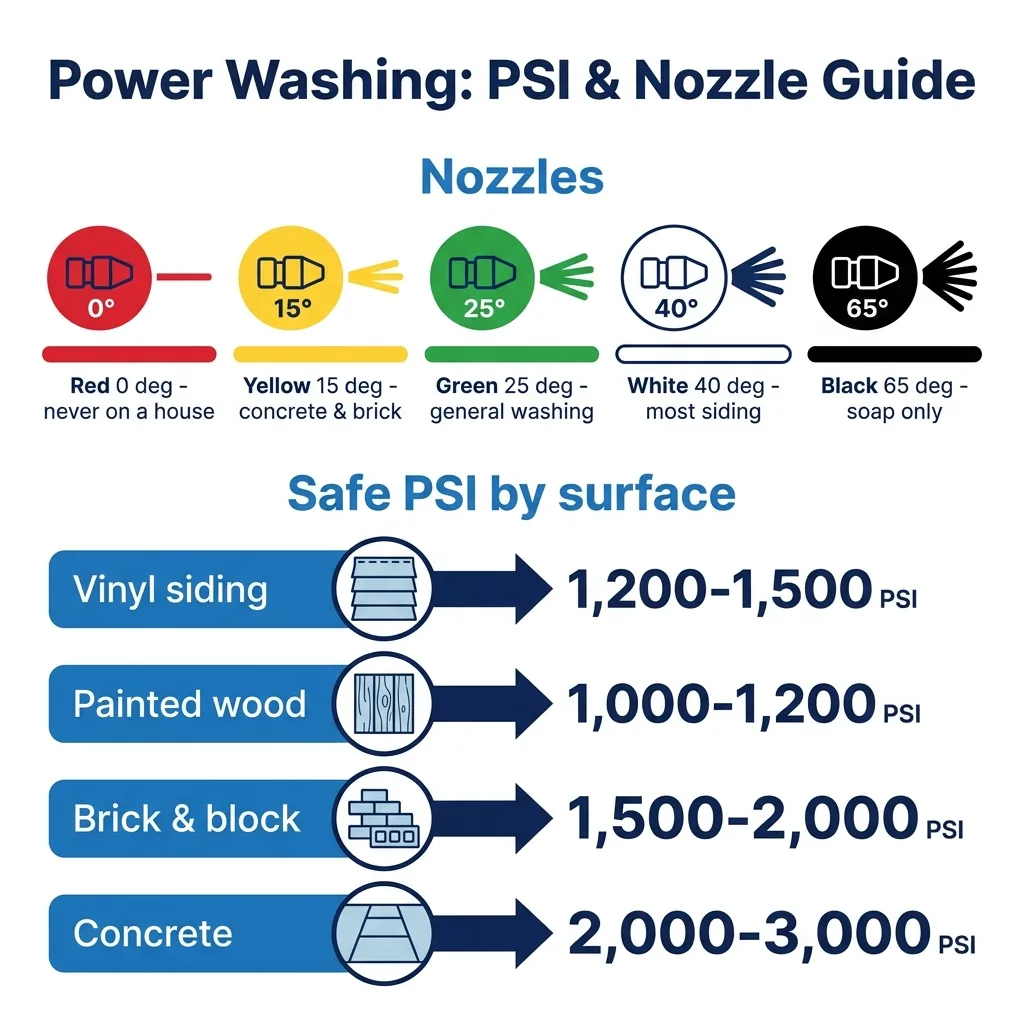
Nozzle choice controls the effective pressure at the surface more than the machine’s rated PSI. Understanding this prevents most surface damage.
| Nozzle Color | Spray Angle | Best For |
|---|---|---|
| Red | 0 degrees | Nothing on a house. Cutting weeds only. |
| Yellow | 15 degrees | Concrete, brick, very stubborn stains |
| Green | 25 degrees | General washing, concrete, lightly soiled siding |
| White | 40 degrees | Most siding, windows, painted wood |
| Black | 65 degrees | Soap application only, very low pressure |
For vinyl siding on a typical NJ colonial or Cape Cod, start with the white 40-degree nozzle at low pressure and step up only if needed. Fiber cement siding (like HardiePlank), painted wood, and stucco should be treated like vinyl: wide angle, low pressure, and a detergent to do most of the work.
Older homes near the shore, including much of the 1950s–1970s housing stock around Long Branch and West Long Branch, often have original wood trim boards and aging caulking. That older siding and trim makes surface-appropriate technique especially important here. Use the gentlest setting that moves the dirt.
PSI guidelines for common NJ home surfaces (aligned with professional pressure-washing surface guidance):
- Vinyl siding: 1,200–1,500 PSI
- Painted wood siding: 1,000–1,200 PSI
- Brick and block: 1,500–2,000 PSI
- Concrete driveway or walkway: 2,000–3,000 PSI
- Wood deck (unfinished): 1,200–1,500 PSI
- Composite deck (Trex, etc.): 1,000–1,500 PSI, check manufacturer guidelines
Step-by-Step: Washing the House
Follow this order on every job. Deviating from it creates rework.
Step 1: Wet the surface. Before applying soap, rinse the wall with plain water. This loosens surface dust and helps the detergent spread evenly rather than concentrating in dry spots.
Step 2: Apply detergent from the bottom up. Counter-intuitive but correct. Applying soap from bottom to top keeps it from running down and drying on already-wet lower sections. Use a low-pressure downstream injector or a soap nozzle. Let the detergent dwell five to ten minutes. Don’t let it dry. In hot NJ summer sun, that can happen fast on south-facing walls.
Step 3: Agitate stubborn spots with a soft brush. Mold, algae, and heavy mildew usually respond to detergent alone, but stubborn patches on north-facing walls or shaded areas sometimes need a gentle scrub brush before rinsing. This is far safer than increasing pressure.
Step 4: Rinse from the top down. Switch back to a fan nozzle (green or white) and rinse from the roofline down to the foundation. Keep the nozzle moving. Don’t hold on one spot. Keep the wand at a 45-degree angle pointing downward to avoid forcing water up behind siding laps.
Step 5: Rinse landscaping again. After you wrap up, re-wet all plants and rinse any detergent residue off the ground around the foundation.
For more context on what professional service costs vs. doing it yourself, see our power washing cost guide for NJ homes, which breaks down pricing by surface for Monmouth County.
The Surfaces You Should Not Power Wash
Some surfaces look like they need pressure washing. They don’t, or at least not with conventional high-pressure technique.
Asphalt shingles. High-pressure washing strips the protective granules off shingles, shortening their lifespan and voiding most manufacturer warranties. Roof cleaning requires soft washing with a low-concentration bleach and surfactant mix, applied with a low-pressure pump and rinsed gently. Water forced under shingles or behind siding can rot sheathing and feed hidden mold, so correct technique matters well beyond appearance. Never point a pressure washer directly at shingles.
Old or painted wood siding. The pressure that cleans concrete will strip paint from wood in seconds. If the paint is already failing, pressure washing accelerates the problem. Use 800–1,000 PSI max and let the detergent do the work.
Windows. The glass itself can handle pressure washing from a safe distance. The seals around the glass panes cannot. Direct high-pressure washing at window edges dislodges weatherstripping and can crack older glazing putty. Rinse windows from a distance with a low-pressure wide nozzle.
Outdoor electrical panels and meters. Keep the wand away from these entirely. Water intrusion into electrical panels is a serious hazard. Cover them before you start and keep the spray pointed away from them throughout the job.
If you’re uncertain about a specific surface, our electrical services team can assess any electrical exposure concerns, and our general home repair crew handles any surface-prep work before a wash job.
What the Best Month to Power Wash a House in NJ Actually Is
Spring and early fall are the practical answers for most NJ homeowners. Late April through early June hits the right window: the salt and organic buildup from winter has fully settled, temps are moderate so detergent works properly, and you’re ahead of prime deck and patio season.
Early September through mid-October is the fall window. You’re cleaning off summer algae growth and prepping surfaces before winterization. If you plan to restain a deck, repaint trim, or apply concrete sealer on a driveway, you want the surface clean and dry, which means washing before you do the finish work.
Avoid washing below 40 degrees. Water in cracks freezes and expands. Avoid washing in direct sun above 85 degrees on south or west-facing walls: the soap dries before the dwell time does its job.
In shore towns like Long Branch, Monmouth Beach, and West Long Branch, the salt air year-round means biological growth on north and shaded east-facing walls is nearly constant. Annual spring washing is standard in these areas. You’ll see the results: clean siding, no black streaks at the roofline, and no green tinge at the foundation.
Our post on how home maintenance services keep your home in great shape includes timing guidance on annual exterior tasks alongside power washing.
When to Call a Pro Instead
Power washing is a manageable DIY project for a single-story home with concrete and vinyl. It gets more complicated quickly.
Call a professional when: the home is two stories or more and requires ladder work, the siding is old painted wood or stucco, there’s significant mold on the roof or at the roofline, or you’re prepping for a paint job and need a guaranteed-clean surface. Getting paint prep wrong is expensive. A professional wash followed by a proper inspection costs far less than peeling paint six months later.
We handle power washing as part of exterior prep for painting, staining, and general maintenance jobs across West Long Branch and all of Monmouth County. Our crew has been doing this work for 25+ years, fully insured, and we’re available to schedule anytime. Call or text (732) 400-4667 for a free estimate on your specific situation.
Frequently Asked Questions
Can I pressure wash my house myself?
Yes, for most single-story homes with vinyl siding or concrete surfaces, DIY pressure washing is feasible with a rental machine and the right nozzle. Use a 40-degree fan nozzle, stay below 1,500 PSI on siding, apply detergent bottom-up and rinse top-down, and protect landscaping. Two-story homes, old wood siding, stucco, and roof work are better left to professionals.
What not to do when pressure washing siding?
Never use a 0-degree or 15-degree red/yellow nozzle on siding. Never spray upward at a steep angle into siding laps. Never let detergent dry on the surface before rinsing. Never point the wand at window seals, vents, or electrical boxes. Never use pressure above 1,500 PSI on vinyl without testing a small hidden area first.
What is the best month to pressure wash a house in NJ?
Late April through early June is the best window for most NJ homeowners. The winter and shoulder-season buildup has settled, temperatures are moderate so detergent performs well, and you’re ahead of summer outdoor living. Early September through mid-October is the second-best window, good for prepping surfaces before painting, staining, or winterizing.
What is the 80/20 rule in house cleaning?
In the context of power washing, the 80/20 rule is a practical reminder that most visible cleaning is done by the detergent, not the pressure. Roughly 80% of the cleaning action comes from the soap and dwell time; the remaining 20% is the rinse. This is why lowering pressure and letting the detergent work is safer and often more effective than blasting with high PSI.
Need a Hand?
Licensed Handyman in New Jersey
Same-day service · Free estimates · 25+ years in New Jersey
Call (732) 400-4667People Also Ask
Frequently Asked Questions
Can I pressure wash my house myself?+
Yes, for most single-story homes with vinyl siding or concrete surfaces, DIY pressure washing is feasible with a rental machine and the right nozzle. Use a 40-degree fan nozzle, stay below 1,500 PSI on siding, apply detergent bottom-up and rinse top-down, and protect landscaping. Two-story homes, old wood siding, stucco, and roof work are better left to professionals.
What not to do when pressure washing siding?+
Never use a 0-degree or 15-degree red/yellow nozzle on siding. Never spray upward at a steep angle into siding laps. Never let detergent dry on the surface before rinsing. Never point the wand at window seals, vents, or electrical boxes. Never use pressure above 1,500 PSI on vinyl without testing a small hidden area first.
What is the best month to pressure wash a house in NJ?+
Late April through early June is the best window for most NJ homeowners. The winter and shoulder-season buildup has settled, temperatures are moderate so detergent performs well, and you're ahead of summer outdoor living. Early September through mid-October is the second-best window, good for prepping surfaces before painting, staining, or winterizing.
What is the 80/20 rule in house cleaning?+
In the context of power washing, the 80/20 rule is a practical reminder that most visible cleaning is done by the detergent, not the pressure. Roughly 80% of the cleaning action comes from the soap and dwell time; the remaining 20% is the rinse. This is why lowering pressure and letting the detergent work is safer and often more effective than blasting with high PSI.