Power Washing Cost in NJ: 2026 Pricing for Homes, Decks and Driveways
Licensed NJ Handyman
Handyman Near Me NJ · 25+ years

Key Takeaways
- Power washing a house in NJ typically costs $200–$600 for an average-sized home; driveways run $100–$250 and decks $100–$300.
- Pricing depends on surface area, surface type, degree of staining, and accessibility. Shore-area homes with salt buildup and mold often need more passes.
- Soft washing (lower pressure with detergent) is the right method for siding, painted surfaces, and older wood. High-pressure washing is reserved for concrete and masonry.
- Monmouth County’s humid summers and salt air create ideal conditions for mold, algae, and mildew buildup, making annual or biannual washing worthwhile.
- DIY rental machines run $50–$100 per day, but incorrect technique damages siding, forces water behind trim, and voids some manufacturer warranties.
Power washing a house in New Jersey typically costs $200–$600 for an average-sized home, with driveways around $100–$250 and decks $100–$300. Those ranges sit within national pressure-washing cost data of roughly $0.10 to $0.50 per square foot. The final price depends on surface size, buildup severity, and whether the job calls for standard pressure washing or gentler soft washing.
What NJ Homeowners Actually Pay: Pricing by Surface
Before diving into what drives cost up or down, here’s a realistic pricing snapshot for Monmouth County in 2026. These ranges reflect the local market, not national averages that often understate NJ labor costs.
| Surface | Typical Cost Range | Notes |
|---|---|---|
| House exterior (per sq ft) | $0.10–$0.35 per sq ft | Vinyl siding vs. brick, single vs. two-story |
| Whole house wash (2,000 sq ft) | $200–$600 | More for multi-story or heavy mold |
| Driveway (concrete, standard) | $100–$250 | Extra for oil stains, sealer prep |
| Deck (wood or composite) | $100–$300 | Depends on size, condition, and stain type |
| Fence (wood, 100 linear ft) | $75–$175 | Wood requires lower pressure |
| Patio (concrete or pavers) | $100–$225 | Pavers need careful technique |
| Roof (soft wash only) | $250–$600 | Never use high pressure on shingles |
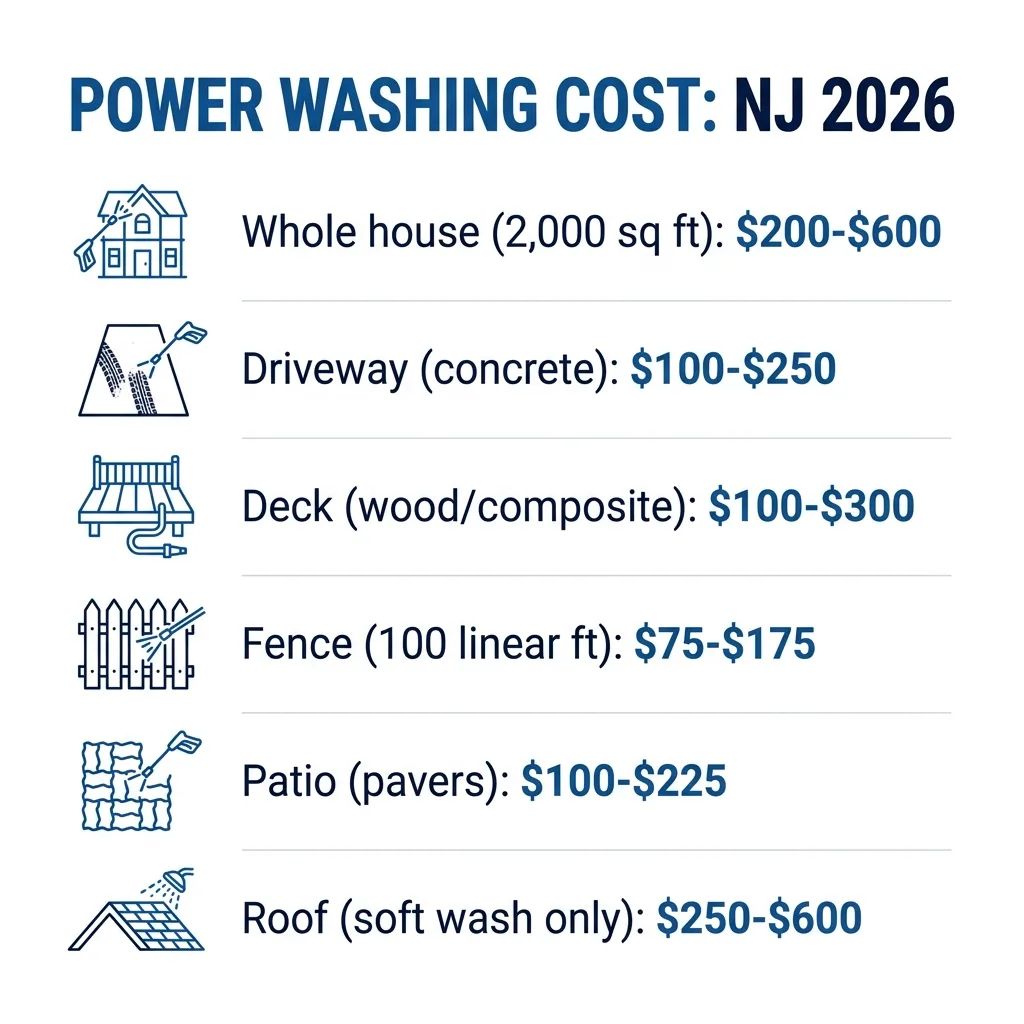
These are installed, professional-service prices that vary by contractor and scope. For reference, national data puts driveway washing around $210 on average and deck washing at $100 to $350, with shore-area jobs trending toward the higher end.
What Pushes the Price Up (or Down)
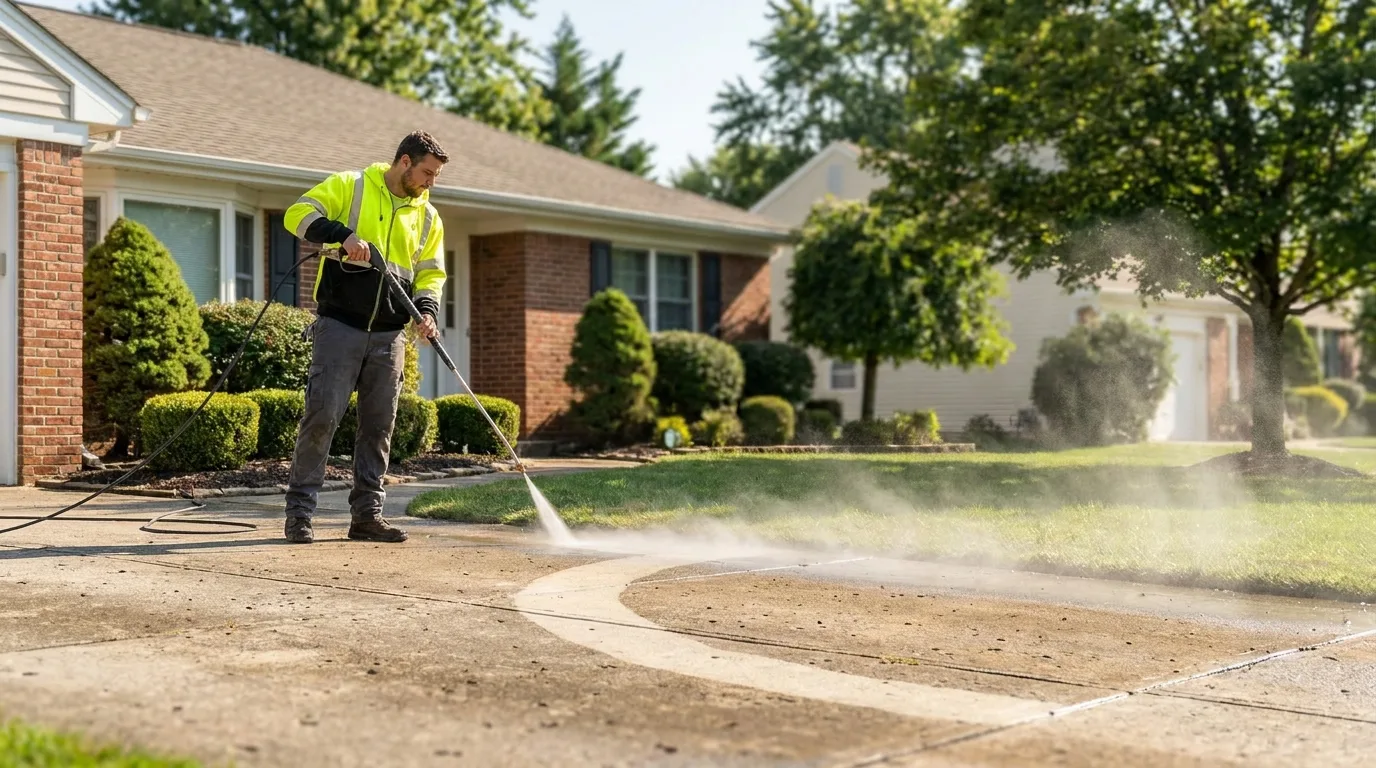
Power washing cost isn’t just about square footage. Several factors move the number significantly.
Salt air and mold buildup. Homes within a few miles of the Jersey Shore accumulate salt, algae, and mold faster than inland homes. Much of the older single-family housing stock near the water was built before 1980, and that aging siding and trim is more vulnerable to organic growth and salt exposure. A house near the water in Long Branch might need significantly more passes and a pre-treatment soap application than a home further inland. That adds time and cost.
Surface type. Concrete tolerates high pressure (2,000–3,000 PSI). Vinyl siding does better at 1,200–1,500 PSI with a wider fan nozzle. Older wood siding, painted surfaces, and stucco require soft washing techniques with lower pressure and a surfactant to lift biological growth without blasting the surface apart.
Story height. A single-story home is straightforward. A two- or three-story colonial with dormers and elevated soffit areas requires ladders or an extension wand, which slows the job and adds to labor time.
Prep work and post-treatment. Decks that are being prepped for staining or sealing need more thorough cleaning than a simple rinse. Driveways with oil stains or rust need a degreaser pre-soak. If you’re prepping a deck for a new stain, factor in dry time before the finish coat, too. Our expert deck staining and sealing guide walks through that process in full.
Accessibility. Tight side yards, landscaping close to the foundation, or a deck built at an awkward height all slow the crew down. Most contractors price these factors in after a visual assessment.
Soft Washing vs. Pressure Washing: Why the Method Matters
Soft washing is a lower-pressure cleaning method that relies on a biodegradable surfactant solution to break down mold, algae, mildew, and organic staining. Pressure washing uses mechanical force.
The distinction matters for NJ homeowners because the wrong method on the wrong surface causes real damage.
High-pressure washing on vinyl siding can force water behind panels and into wall cavities, leading to mold growth inside the wall. On older painted wood siding, it strips paint. On asphalt shingles, it dislodges granules and shortens roof life. Technique matters as much as equipment here. We see this damage regularly on homes where a homeowner used a rental machine at full pressure.
Soft washing is the right call for: painted surfaces, older wood, stucco, fiber cement siding, and roofs. High-pressure washing is appropriate for concrete driveways, brick, block, and stone patios.
A good contractor will use the method the surface requires, not the same setting for everything. If a quote doesn’t mention method or PSI, ask.
Should You Hire a Pro or Rent a Machine?
This is the question most homeowners ask first. Here’s an honest breakdown.
Renting a gas-powered pressure washer runs under $100 per day at most equipment rental shops in Monmouth County. Add detergent, nozzles, and your own time, and the cost gap between DIY and professional narrows quickly.
The risk isn’t just the price. It’s technique. A 3,000 PSI machine in the hands of someone unfamiliar with surface pressure limits can strip paint, damage trim, and push water into places it should never go. Some vinyl siding and fiber cement manufacturers include language in their warranties that excludes damage from improper pressure washing.
For concrete driveways and block walls, DIY pressure washing is generally low-risk and worth trying. For a full house wash, roofline, or a deck you plan to restain, professional service is the better call. You’re paying for judgment, not just the machine.
Want to know what the process looks like before you hire someone or pick up a rental machine? Our step-by-step guide on how to power wash a house safely walks through exactly what pros check before they pull the trigger.
Timing: When to Power Wash in NJ
Spring and early fall are the best times to power wash in New Jersey. Spring cleaning removes the salt, sand, and biological growth that accumulates over winter and the shoulder season. Fall washing before exterior painting or deck staining is also common.
Avoid washing in below-freezing temps. Water in cracks or behind trim can freeze and expand, widening existing damage. Avoid washing on days above 90 degrees in full sun, too: detergent dries before it can work properly.
In a Jersey Shore environment, many homeowners wash annually. Homes without trees or significant shade exposure may go two years between washes without visible issues. Homes surrounded by oaks or near water with persistent humidity often need more frequent cleaning to stay ahead of algae.
For help planning exterior maintenance timing alongside other seasonal tasks, see our post on 24/7 emergency handyman services in West Long Branch for context on year-round exterior upkeep.
Get a Straight Quote for Your Home
Every house is different. A ranch with a concrete driveway is a different job than a two-story colonial with a large deck, old wood siding, and a fence line. The only way to get an accurate number is to let someone look at it.
Call or text (732) 400-4667 for a free estimate. We’ll tell you exactly what the job needs, which method is right for your surfaces, and what it’ll cost. No padding, no surprises. We’re available 24/7 and have been serving West Long Branch and all of Monmouth County for 25+ years.
Frequently Asked Questions
How much should I charge to pressure wash a 2,000 square foot house in NJ?
Professional power washing on a 2,000 sq ft house in NJ runs $200–$500 on average, depending on story count, surface type, and mold buildup. Single-story vinyl-sided homes with light soiling sit at the lower end. Two-story homes with heavy algae or salt buildup, or homes needing soft washing, run higher.
How much does it cost to pressure wash a 1,500 square foot driveway in NJ?
A 1,500 sq ft concrete driveway is on the larger side for residential driveways. Expect $150–$300 for professional service in Monmouth County. Oil stains or rust spots that require pre-treatment with a degreaser push the price toward the higher end.
How long does it take to power wash a 2,000 sq ft house?
A professional crew can power wash a 2,000 sq ft single-story home in two to four hours. A two-story home with more surface area and elevated work adds time. Add another hour or two if the roof or fence is also being washed.
What do you spray on a house before pressure washing?
A biodegradable surfactant or house wash detergent is applied first. It loosens mold, algae, and dirt so less mechanical pressure is needed. The detergent is typically applied from the bottom up and rinsed from the top down. Never use bleach concentrations above what the manufacturer recommends, and protect landscaping from runoff.
Need a Hand?
Licensed Handyman in New Jersey
Same-day service · Free estimates · 25+ years in New Jersey
Call (732) 400-4667People Also Ask
Frequently Asked Questions
How much should I charge to pressure wash a 2,000 square foot house in NJ?+
Professional power washing on a 2,000 sq ft house in NJ runs $200–$500 on average, depending on story count, surface type, and mold buildup. Single-story vinyl-sided homes with light soiling sit at the lower end. Two-story homes with heavy algae or salt buildup, or homes needing soft washing, run higher.
How much does it cost to pressure wash a 1,500 square foot driveway in NJ?+
A 1,500 sq ft concrete driveway is on the larger side for residential driveways. Expect $150–$300 for professional service in Monmouth County. Oil stains or rust spots that require pre-treatment with a degreaser push the price toward the higher end.
How long does it take to power wash a 2,000 sq ft house?+
A professional crew can power wash a 2,000 sq ft single-story home in two to four hours. A two-story home with more surface area and elevated work adds time. Add another hour or two if the roof or fence is also being washed.
What do you spray on a house before pressure washing?+
A biodegradable surfactant or house wash detergent is applied first. It loosens mold, algae, and dirt so less mechanical pressure is needed. The detergent is typically applied from the bottom up and rinsed from the top down. Never use bleach concentrations above what the manufacturer recommends, and protect landscaping from runoff.